
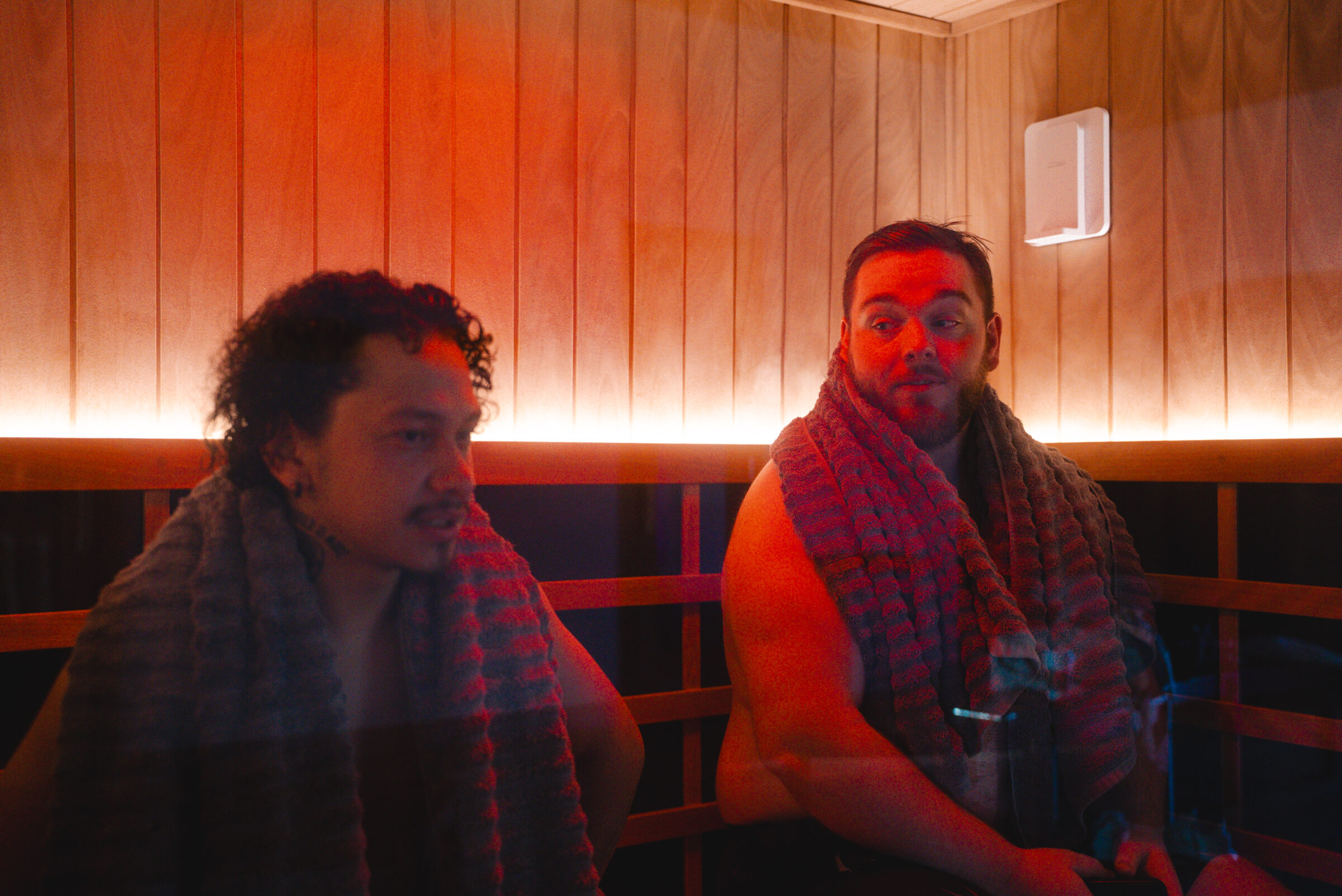
Infrared therapy
Gentler heat that reaches further. Full-spectrum infrared warms the body directly rather than the air around it — with chromotherapy lighting and Halo-One salt therapy built in.
Heat you can
stay in.
Traditional sauna heats the air first. Full-spectrum infrared skips that step and warms you directly, using near, mid and far wavelengths. The air stays at a manageable 165°F, so you sweat deeply without the sharp intensity of the dry sauna.
Both cabins include chromotherapy lighting and Halo-One salt therapy. If the Finnish sauna is a sprint, this is the long walk — and it’s where most people end up settling in.

What infrared does
Directional effects reported in infrared and heat research — not guarantees, and not medical advice.
Deeper, longer sessions
Because the air is cooler, most people comfortably stay in far longer than in a traditional sauna. Which means more total heat exposure, not less.
Targeted muscle recovery
Infrared penetrates muscle tissue directly rather than warming you from the skin inward, which is why it’s a favorite for post-training soreness.
Chromotherapy
Colored light therapy runs in both cabins. Choose a color or let it cycle, it’s part of what makes the infrared room the calmer of the two heat options.
Halo-One salt therapy
Dry salt aerosol dispersed into the cabin, traditionally used to support respiratory comfort and skin. Optional as an Add – On for $10.
Getting the
most from infrared
Start at fifteen minutes per round
Hydrate First
Use it as your long block
Frequently asked
How is infrared different from a traditional sauna?
What does full-spectrum mean?
What is chromotherapy?
What is Halo-One salt therapy?
How long should I stay in?
Is infrared safe for everyone?
The rest of the studio
Every session includes the entire studio. Infrared is one of three ways in.
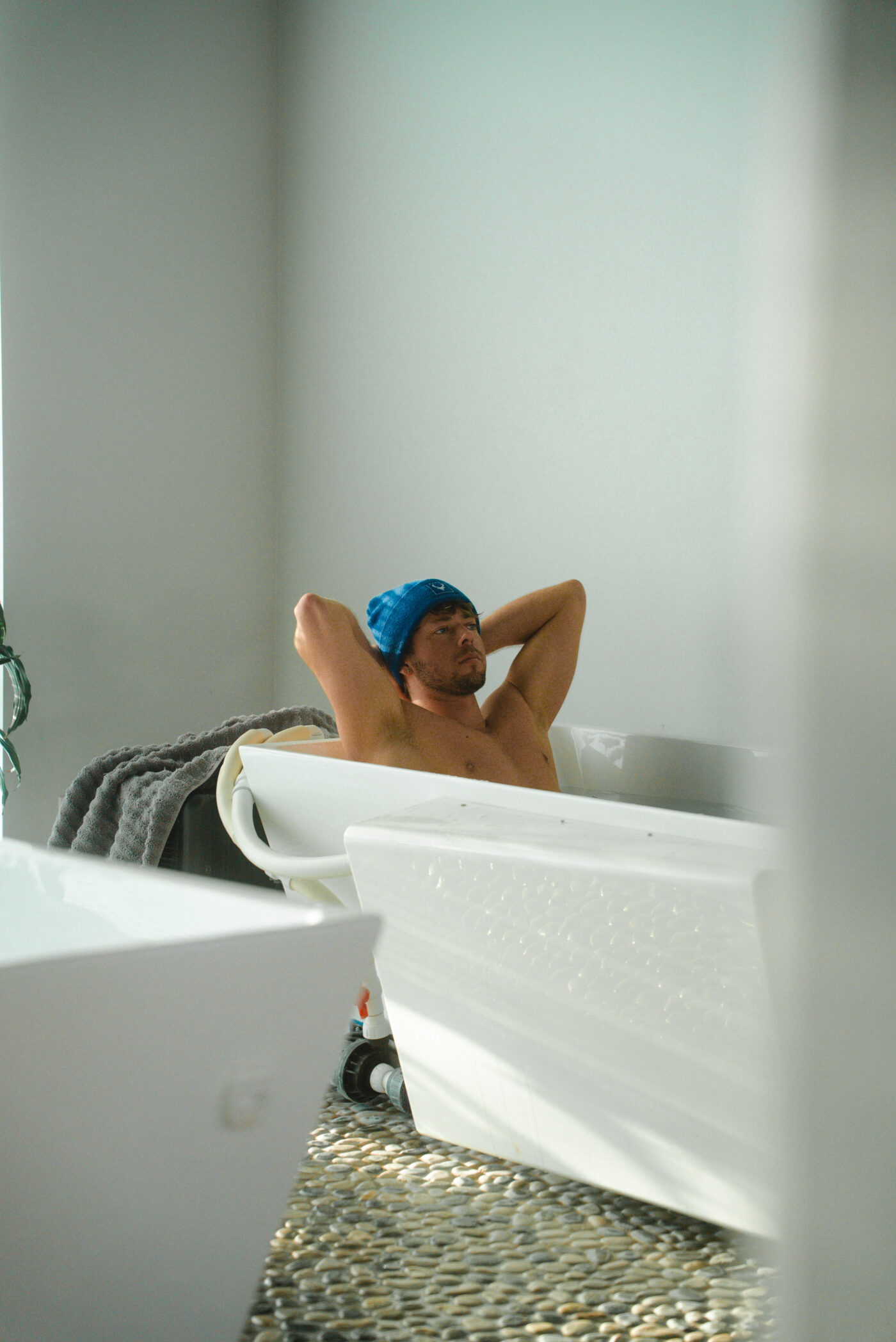


Ready to get in?
Single sessions only $25 and includes the entire studio — both Finnish saunas, infrared, all four plunges, 90 minutes.